

Rhomn Scan
CLIENT
Rhomn Scan
YEAR
2026
INDUSTRY
Developer security
SERVICES
Product & SaaS
Key Highlights
Shipped fast, broken the same way every time
A huge number of apps are now built by people prompting an AI. They ship quickly and fail in the same predictable places: exposed keys, row-level security left off, unprotected API routes, no rate limit on paid model calls. The people shipping them often cannot audit their own code, and nobody else is looking before it goes live.
A rule is not done until it is proven
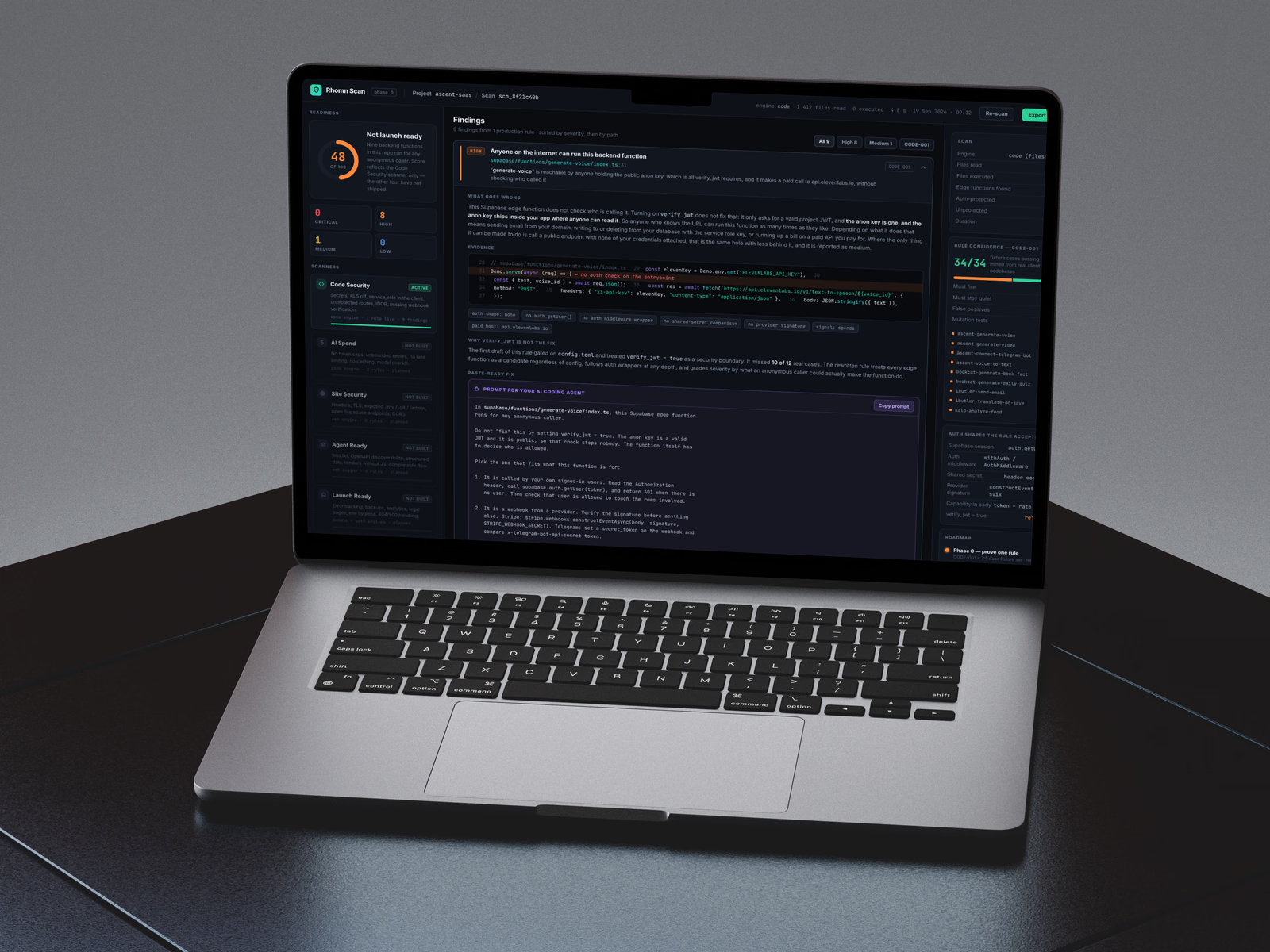
The first production rule reliably finds unauthenticated Supabase edge functions, a problem its own first draft missed ten times out of twelve because it trusted a token check as a security boundary when the key satisfying it ships in the browser bundle. The rewrite and its 34-case fixture set, mined from real codebases, is what turns a hunch into proof.
Audits for apps built by AI, without running their code
Rhomn Scan reads a codebase for security and launch-readiness problems across a set of scanners that share one rule contract and one engine, an engine structurally forbidden from executing anything it scans.
How a scan works
The path a person actually takes through it, start to finish.
Run the scanner against your repo from the command line
The engine reads every file and installs or executes nothing
Rules match file and repo-wide patterns against known failures
A free report shows the score and severity counts
Unlock the full report with paste-ready fix prompts