

Labs
How we built a faceless YouTube channel with Claude in 12 hours
A faceless YouTube channel usually means stock footage, a cloned voice and a video generator. The Ledger has none of those. It is an animated fraud-thriller series where every frame, every note of music and every sound effect is written in code, and Claude built the whole engine behind it in about twelve hours.
We have wanted to run a channel like this for a while, and editing was always the part that stopped it. Then people on X started posting motion graphics made in one prompt with Claude Opus 5.5, so we gave it a real brief: a whole series, not a clip. Everything ran on a Claude subscription and a MacBook. No paid APIs.
What the channel is
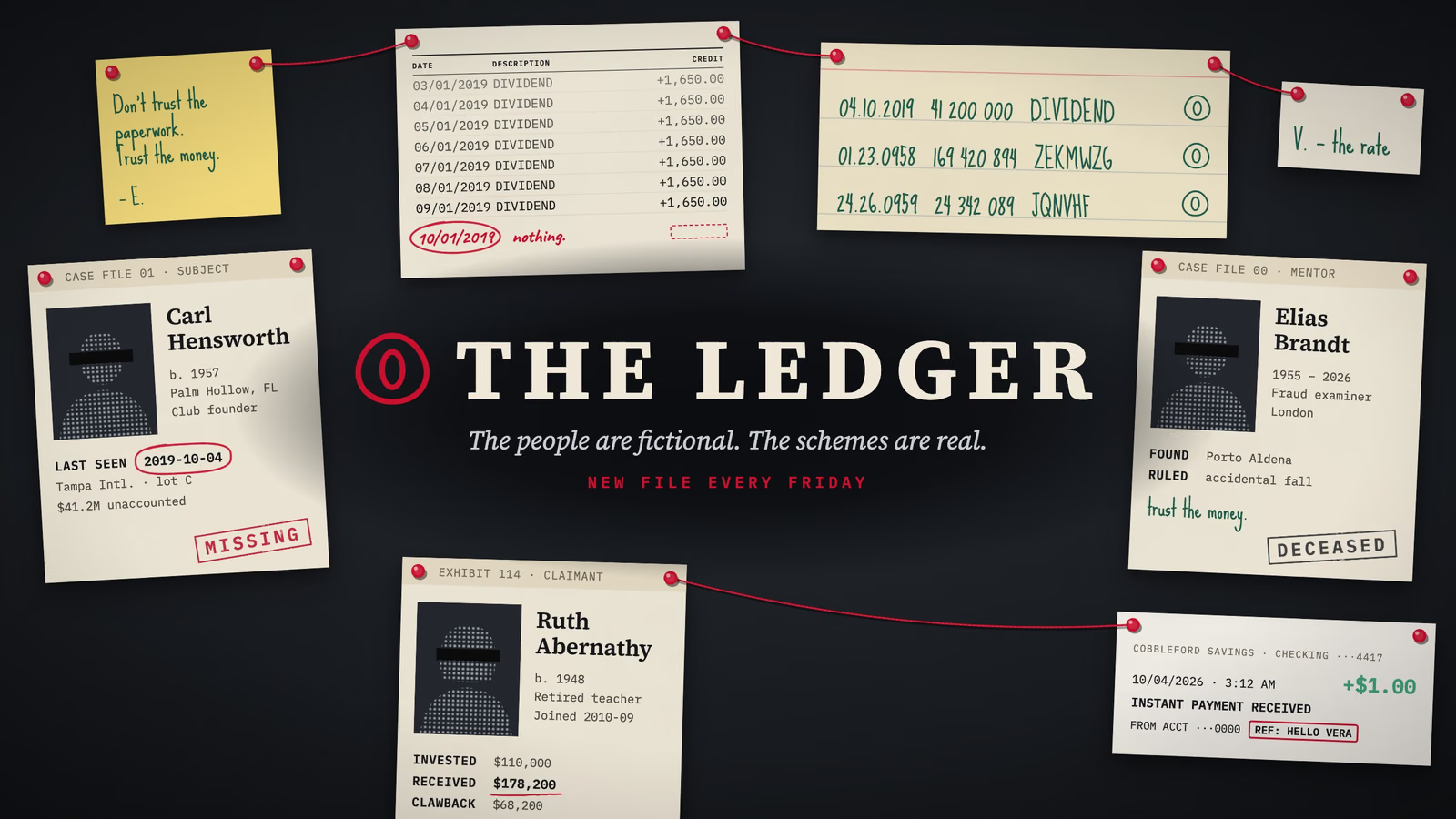
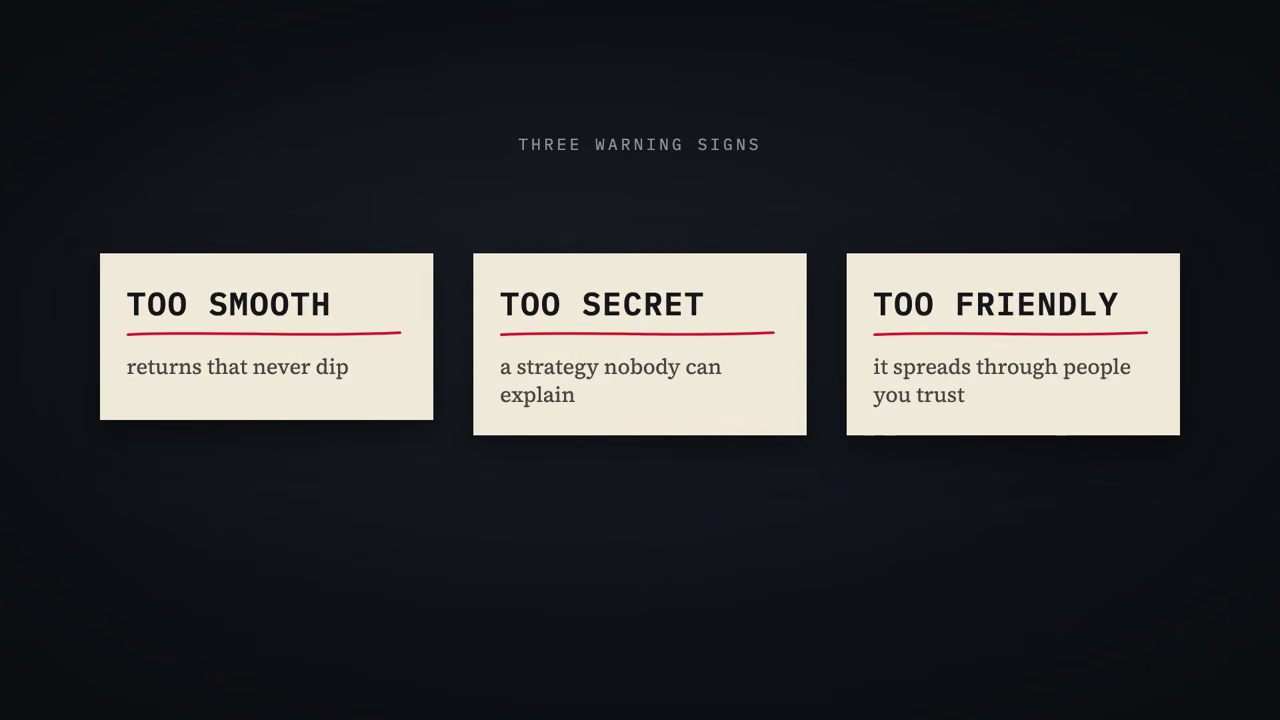
Vera Hale, a forensic accountant, inherits her murdered mentor’s coded ledger. Every line in it is a real fraud method, and every method points to one account. Each episode is a case file: one scheme taught as warning signs, and one real case told from court and regulator records. The line on the channel art sums it up: “The people are fictional. The schemes are real.”
Season one has ten files planned. File 01, The Dividend (9 minutes 31 seconds, a Ponzi scheme), is live on the channel, and File 02, The Nesting Dolls (8 minutes 16 seconds, shell companies), is finished and next in line.

Claude motion graphics, one stage at a time
The engine is a chain of small programs, and each one checks the one before it. Claude wrote all of them.
- 1Research and fact-checkEvery claim about a real case goes into a table with its source. Anything that cannot be traced to a court or a regulator is marked unverified and cut.
- 2Script from a simulationThe numbers in File 01 come from a small Ponzi model written in Python. The script reads its figures from that model, so the dividends on screen add up.
- 3Voices on the laptopThree characters are voiced by Kokoro, an open-source speech model that runs locally. Whisper, also local, listens back to every line to catch mispronunciations: 71 of 71 lines passed in File 01 and 78 of 79 in File 02.
- 4Music and sound from mathsThe score and 49 sound effects are synthesised in Python with numpy. No samples. The recurring four-note motif is written as notes in code.
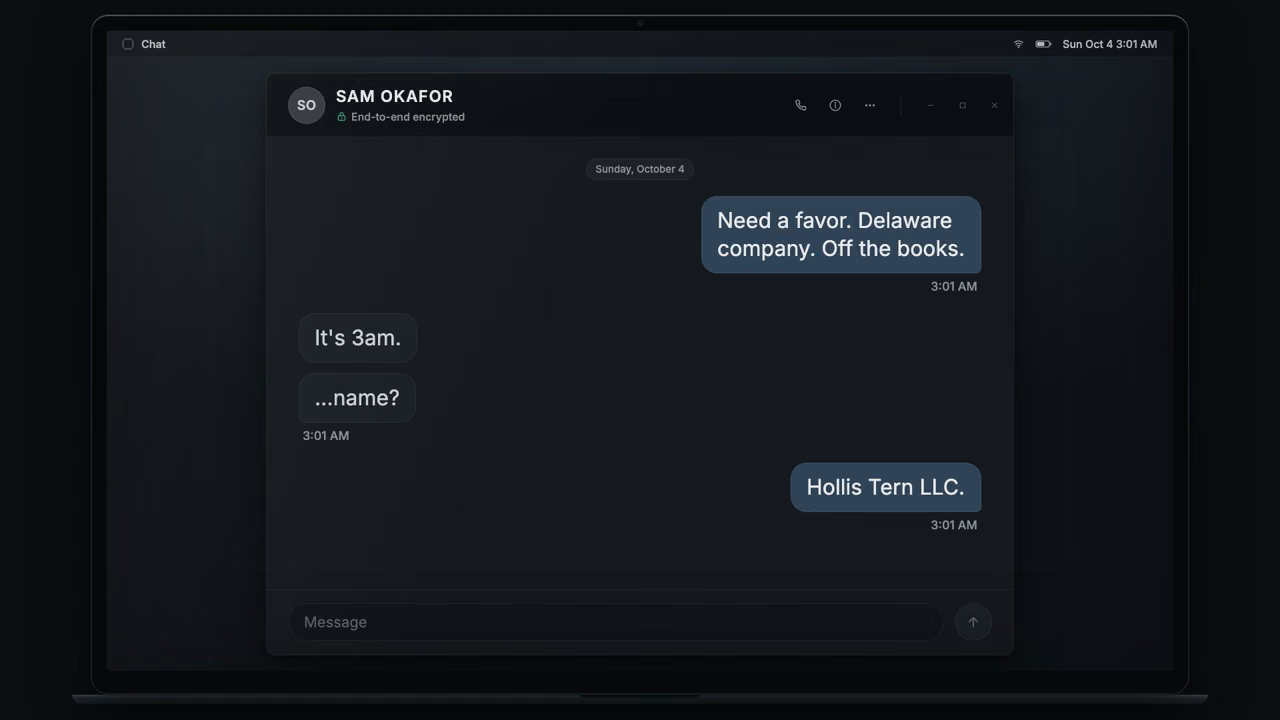
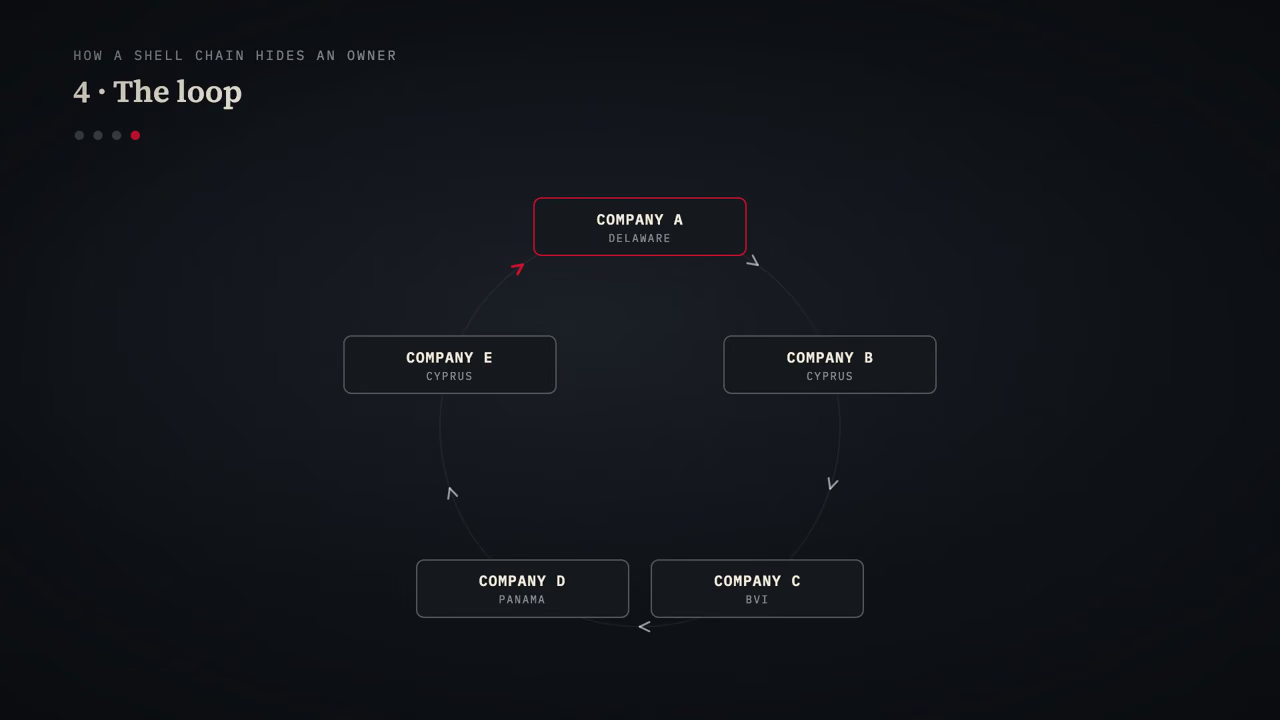
- 5Animation in RemotionEvery scene is a React component rendered by Remotion, about 18,000 lines of TypeScript in all. Maps, bank screens, chats and documents are drawn, not recorded.
- 6Automatic QABefore a render, stills are captured and checked for overlapping text, blank frames and words on screen too briefly to read. 322 check frames so far.
- 7Render and masterFile 01 takes 39 minutes to render on an 8 GB M2 MacBook. The audio is mastered to YouTube’s loudness target of −14 LUFS.
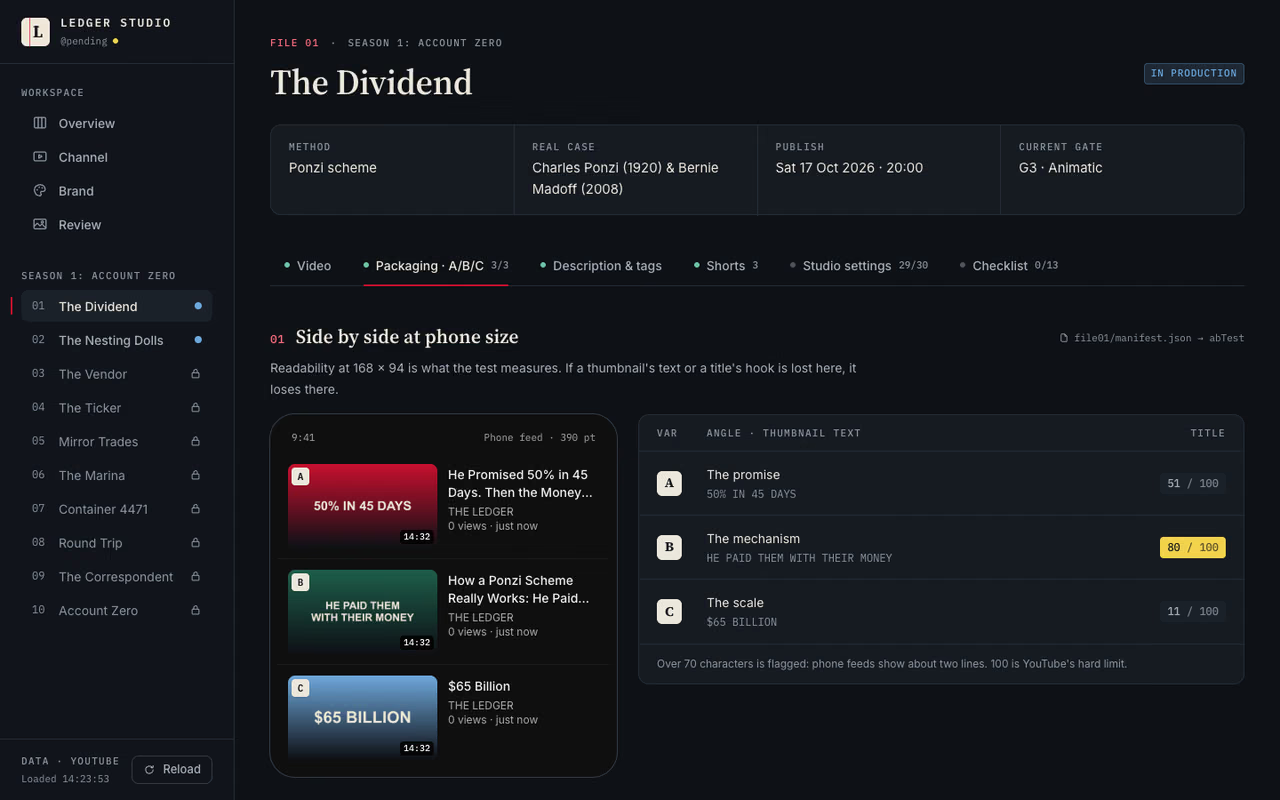
- 8Shorts and packagingThree vertical Shorts per file are built as their own compositions, with word-timed captions. Each file also gets three titles and three thumbnails for YouTube’s Test & Compare.
The dashboard that runs it
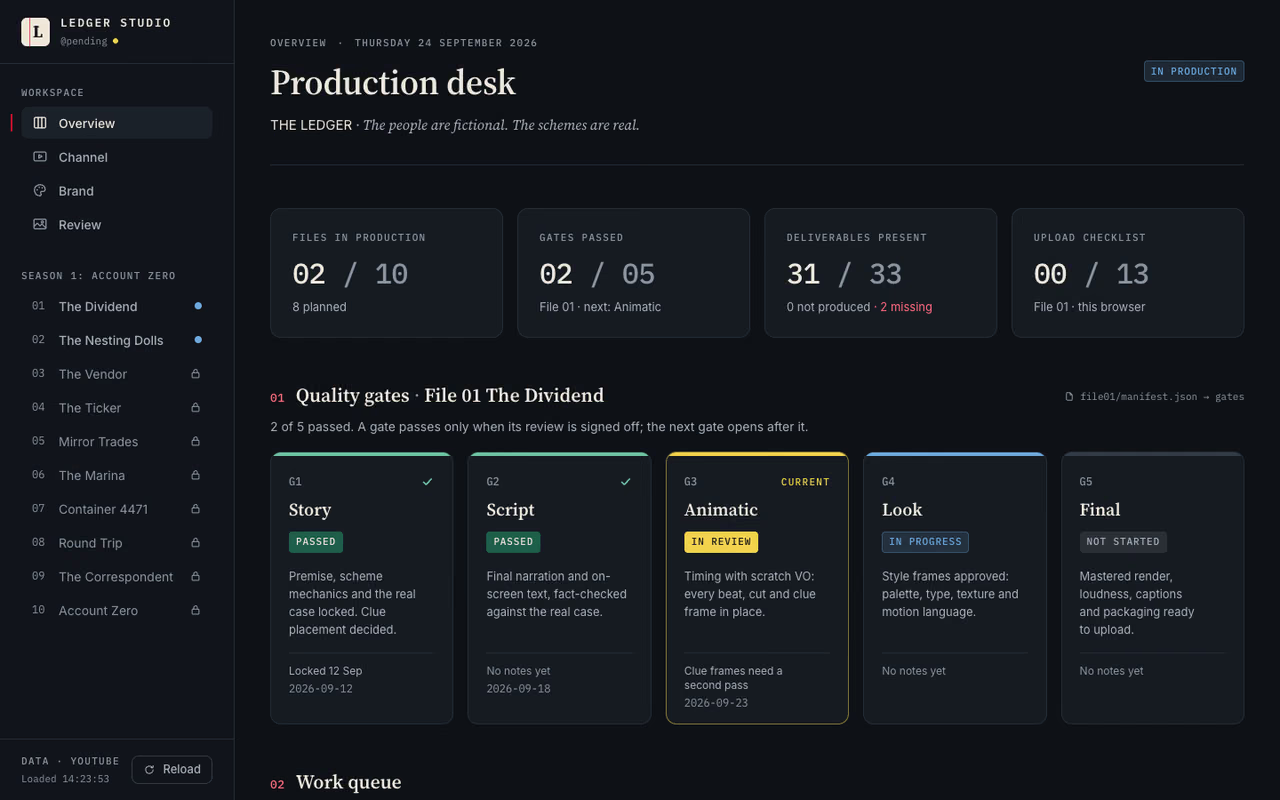
Ledger Studio is a small web app that reads the production files and shows where each episode stands: five quality gates from story to final cut, what is missing, and the checklist for upload. Packaging is previewed at phone size, because that is where a thumbnail wins or loses.
What is on disk after twelve hours
- 2 episodes, 9:31 and 8:16
- 6 Shorts
- 6 thumbnails
- 6 Short covers
- Captions for both
- 150 voice lines
- 49 sound effects
- 10 music cues
- 11 voice auditions
- Remotion scenes
- Python simulation
- Local voice and ASR
- QA checks
- Ledger Studio
The rules that keep it from looking AI-made
- No generators, no stock. Everything on screen is drawn in code, so nothing drifts between shots.
- Readability is measured. Text that must be read is at least 42 pixels high, no more than 12 words per shot, and stays on screen for its word count divided by three, plus a second and a half.
- No faces. Characters appear as redacted case-file cards, so the synthetic voice fits the story as dictated case notes.
- Fraud as warning signs. Methods are shown as signals to spot, never as steps to follow. Account numbers and phone numbers are invalid by construction.
What this means for a business
The channel is a hobby, and the pattern behind it is the one we build for clients: a pipeline of small steps, checks between them, and a dashboard that shows a person what needs a decision. The same structure runs the AI systems we build for bookings and enquiries. The work that took twelve hours here is design and checking; the model writes the code.
Questions people asked
Is the channel fully automated?
No. The engine produces the episodes, Shorts and packaging. A person reviews every file and uploads it.
Did it use any paid APIs?
No. Claude wrote the code on a subscription, and the voice and speech-checking models run locally on the laptop.
What tools does it use?
Remotion and React for animation, Kokoro for voices, Whisper for checking them, Python and numpy for the score and the numbers, ffmpeg for mastering, and a Vite and React dashboard.
How long does one episode take to render?
About 39 minutes for a nine-minute episode on an 8 GB M2 MacBook.
Where can I watch it?
On YouTube at @LedgerSeries. File 01 is live, and new files follow once they pass review.