
Craft
The client who rejected the AI film
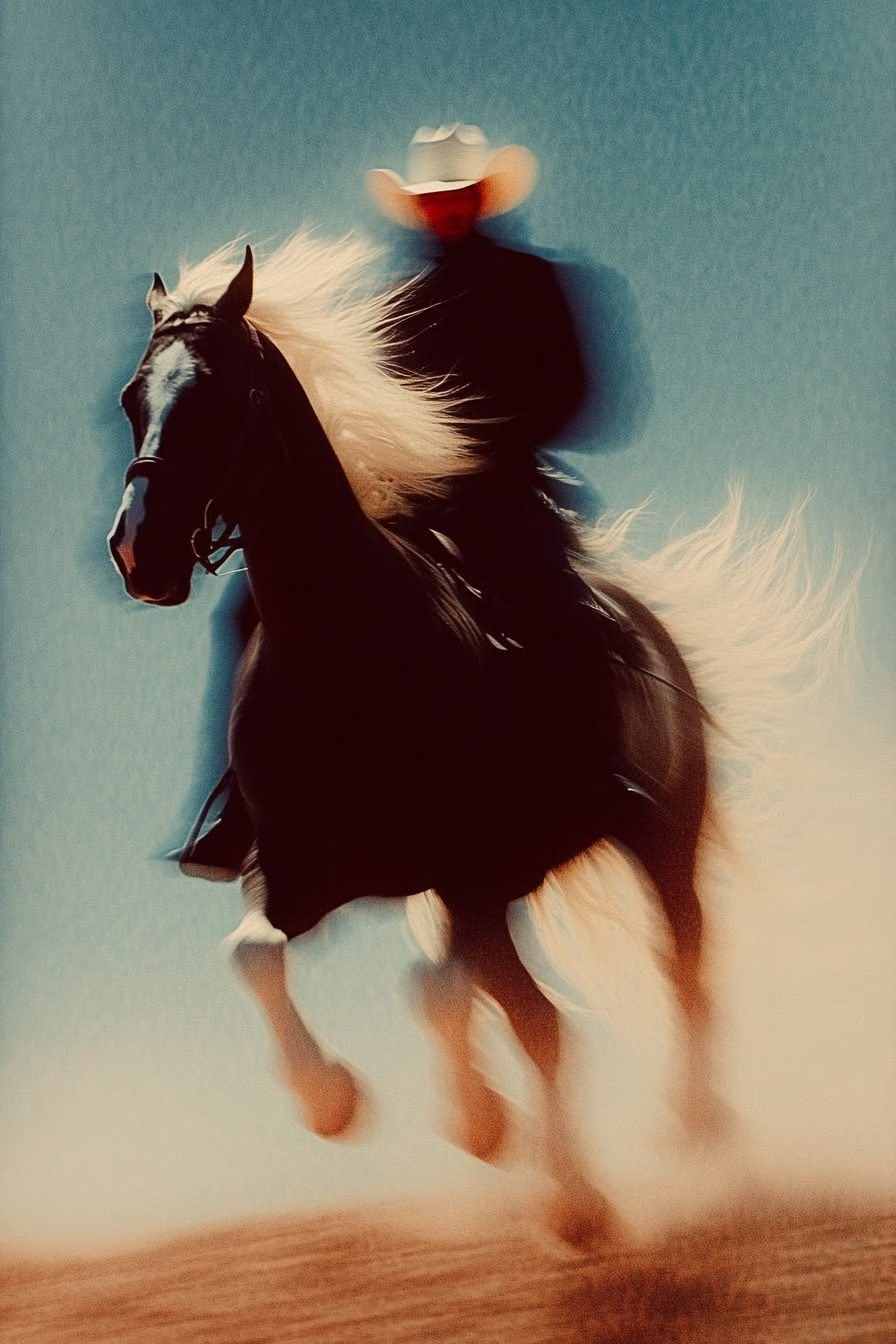
Quadomania runs off-road quad tours in Durmitor. The film Rhomn made for them was a rendered 4K piece built to drive a site that plays as the visitor scrolls, which was the format everyone reached for this year and, technically, the strongest thing in the deliverable.
They did not use it. They had phone footage from actual rides, shot on the trail by people who were on the trail, and next to the render it simply looked more like the thing customers were paying for. Mud on the lens, someone laughing off frame, the shake of a machine crossing rough ground.
The rendered film had a problem that more resolution makes worse rather than better. What it was selling is a ride people book because it is rough, and rendering smooths precisely the qualities being sold. The phone footage lost on every measurable axis and won on the only one that mattered, which was whether it looked true.
The scroll format was the second mistake sitting on top of the first. A film that advances as the visitor scrolls is an argument for slow and deliberate pacing, and it is the right frame for a watch, a building or a perfume. A tour whose product is being thrown around a mountain does not want a controlled reveal, it wants the thing itself, at the speed it actually happens.
The trend was real and the craft was real, and neither was the right answer here. The client was right, and the reason they were right carries past this one job: the format has to agree with what the thing actually is, and AI rendering is extremely good at making anything look expensive, which is a different quality from making it look true, and not always the one being sold.